Euroclass B or C fire rating
Where a Euroclass B or C rating needs to be achieved, it is necessary to treat the timber with a flame retardant. The fire retardant treated material must be installed in line with the parameters set out by the supporting certification, in order for the improved fire rating to be valid.
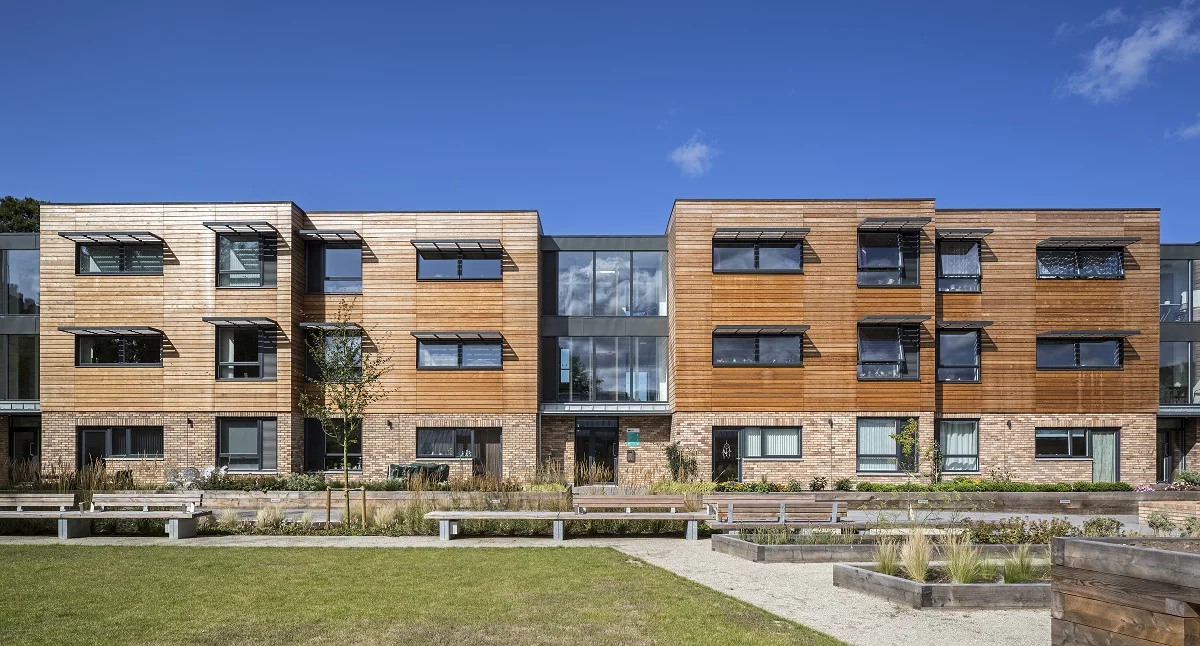
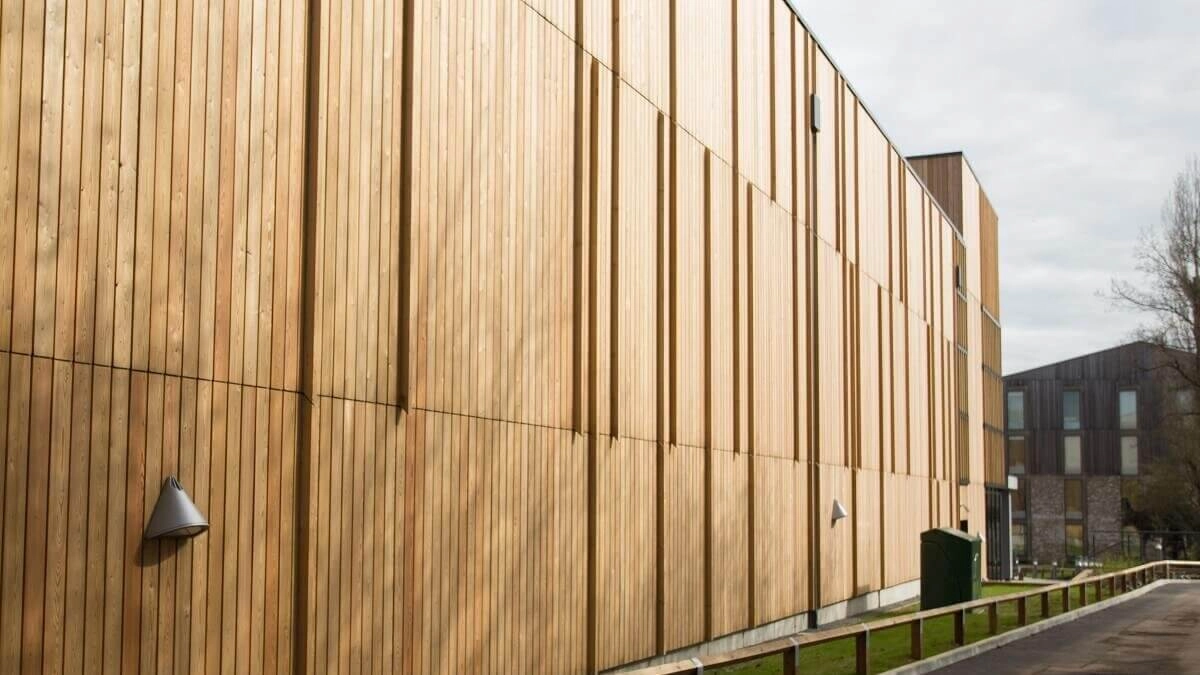
How to achieve a Euroclass B or C rating
The certification parameters relate to the cladding itself (species/thickness etc), but also to the cavity (if present), and the substrate that the cladding is being mounted on. It is important that the façade cladding should be fixed to a wall substrate of fire class A1/ A2-s1,d0 of at least 12 mm thickness and with a density equal to or greater than 525 kg/m³.
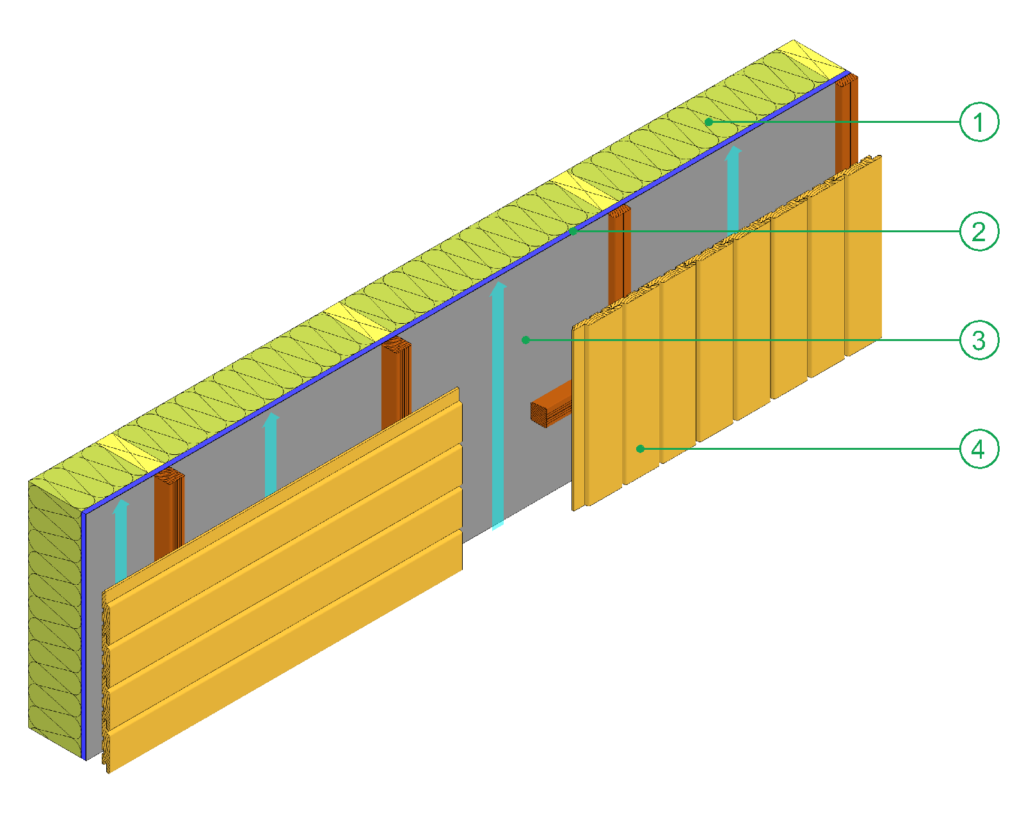
Isometric diagram
Where timber frame buildings are concerned, and if not already included within a SIPS panel system, a suitable sheathing board should be used to cover insulation (eg exterior Gyproc), to give an appropriate fire resistance rating where required.
1. Insulation material / other wall build up arrangement
2. A1 / A2 sheathing board
3. Ventilated cavity with the batten system
4. Cladding boards
Please note – for internal wall panelling where no ventilated cavity is required, cladding may be fixed directly to an A1/A2 wall substrate.
The information on this page is for reference only. Please consult with Building Control for advice on your project.
Find out more
Burnblock® fire retardant treatment
Burnblock® is a 100% biodegradable and natural, market leading fire retardant solution.
Euroclass D fire rating
A Euroclass D rating can be achieved under CWFT rules where certain conditions are met.
Fire performance classes
Reaction to fire performance of timber cladding is defined under EN13501-1. Find out which class you need.
Fire retardant treatment process
Russwood work with experienced specialist Burnblock® applicators to fire treat timber cladding.


