
When designing outdoor spaces, choosing the right decking material is a key decision – one that affects not only appearance but also comfort, longevity and environmental impact.
With a wide range of options available, including synthetic and composite materials, many homeowners and specifiers are asking the same question: timber decking vs composite decking – which is better? At Russwood, we believe that well-specified timber decking offers an unbeatable combination of beauty, performance and sustainability – with benefits that other alternatives can’t match.
Comfort in all conditions
In sunny weather, surface temperature can make all the difference to the usability of an outdoor space. Unlike many composite and plastic options, timber decking doesn’t retain heat. This means it stays comfortable to walk on even on warm days. It’s a natural material with low thermal conductivity – ideal for barefoot summer living.
In contrast, winter conditions can make decks slippery underfoot. Russwood Anti-Slip strips can be factory applied to our timber decking profiles, enhancing slip resistance, which is ideal for large commercial spaces and high-traffic areas where safety is a priority.
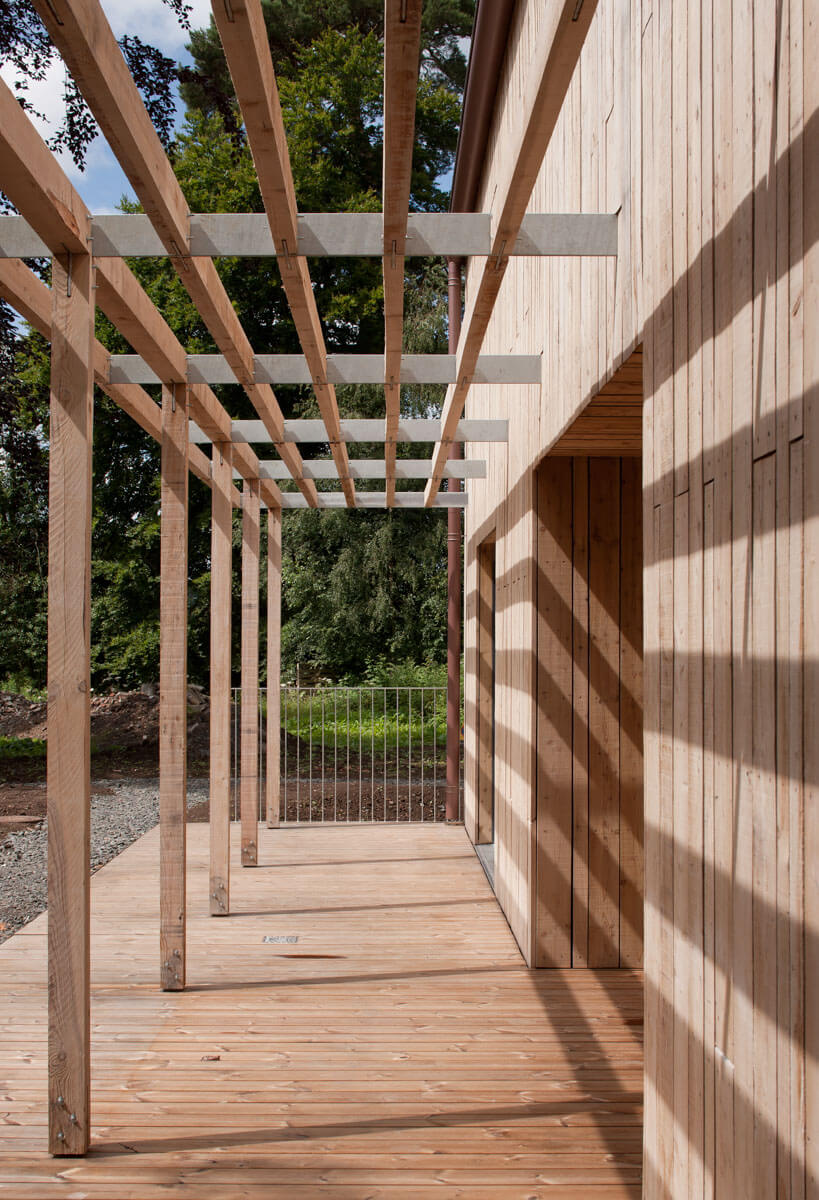
Timber: a natural, sustainable choice
Timber is a renewable resource, and when sourced responsibly, it’s one of the most sustainable materials available for external applications. All Russwood timber is FSC® or PEFC-certified, supporting the long-term health of the world’s forests.
In contrast, composite decking is typically manufactured using plastic polymers, which are derived from fossil fuels. These materials are difficult to recycle and have a higher embodied carbon footprint.
Timber’s sustainability advantage is especially clear when you compare Environmental Product Declarations (EPDs). For example, Thermopine® decking has a total Global Warming Potential (GWP) of approximately -14.1 kg CO₂e per m² – meaning it stores more carbon than it emits across its lifecycle. In contrast, composite decking on average has a GWP of +13.2 kg CO₂e per m².
That’s a difference of over 27 kg CO₂e per square metre – making timber a significantly lower-carbon choice for your decking project.
Choosing timber means opting for a material that is low impact and fully recyclable at end of life.
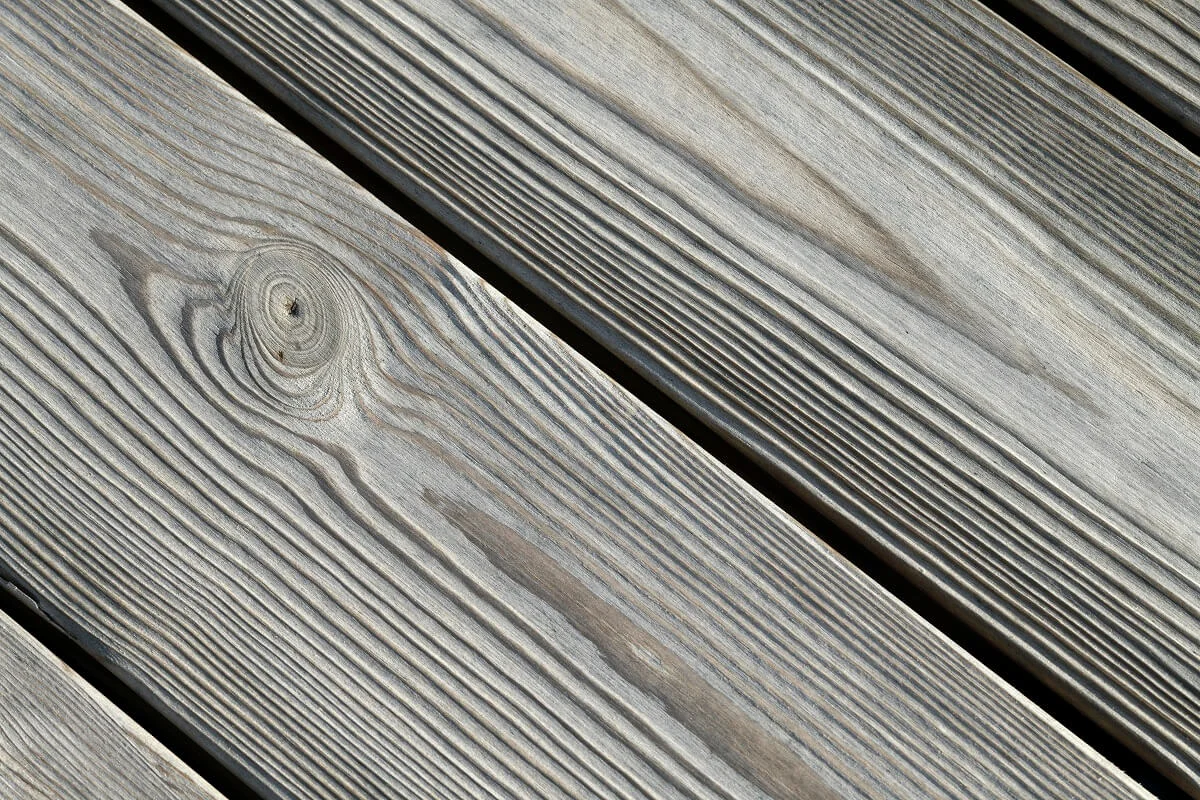
Timeless character of timber decking
While composite boards attempt to replicate the look of timber, nothing comes close to the character of real wood. The natural grain, tone and texture bring warmth and depth to a space, softening hard landscaping and enhancing architectural materials.
At Russwood, we offer two high-performance options that combine beauty with exceptional durability:
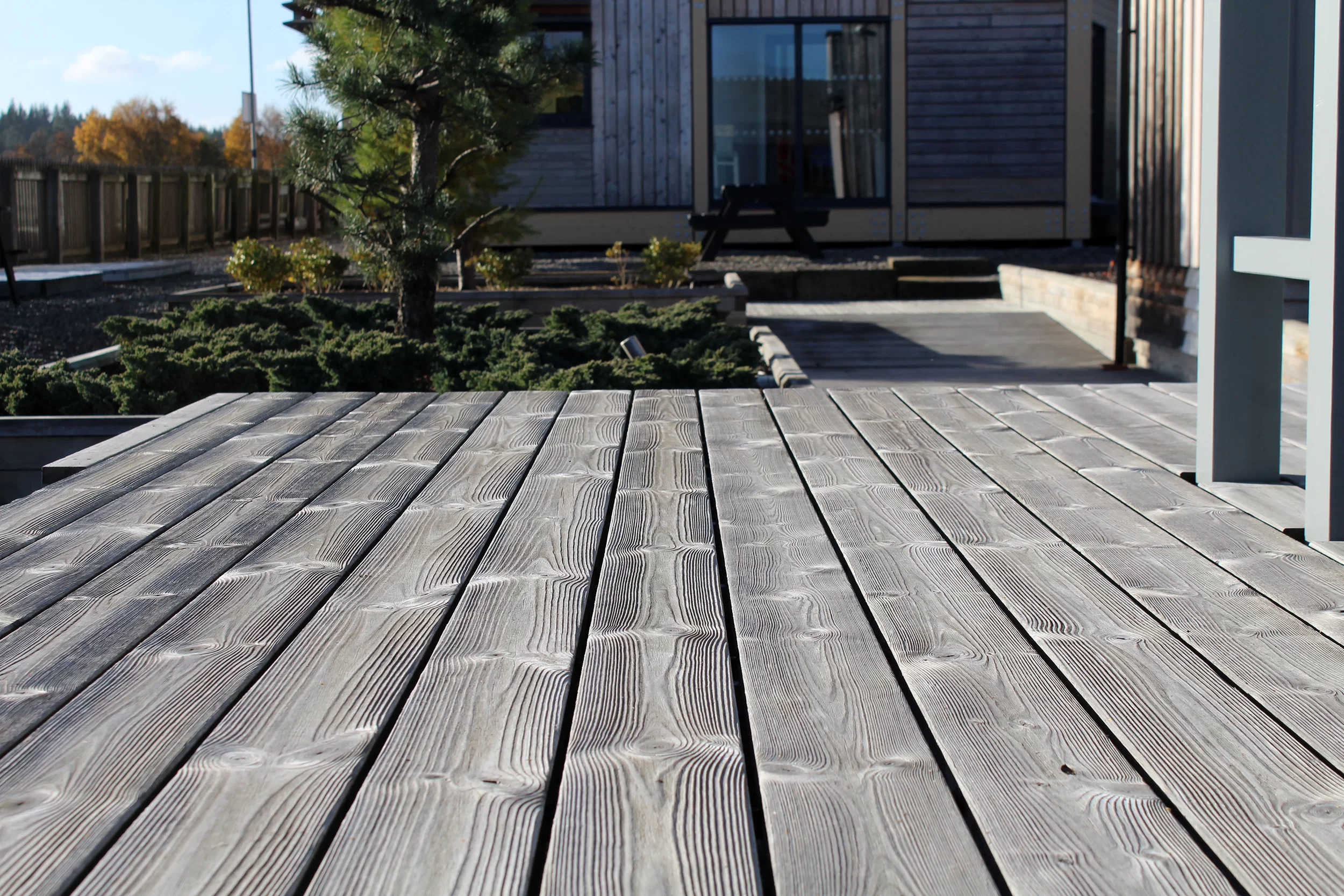
- Thermopine® Decking – A thermally modified Scots Pine with a rich brown tone and enhanced stability, ideal for contemporary projects where longevity is key.
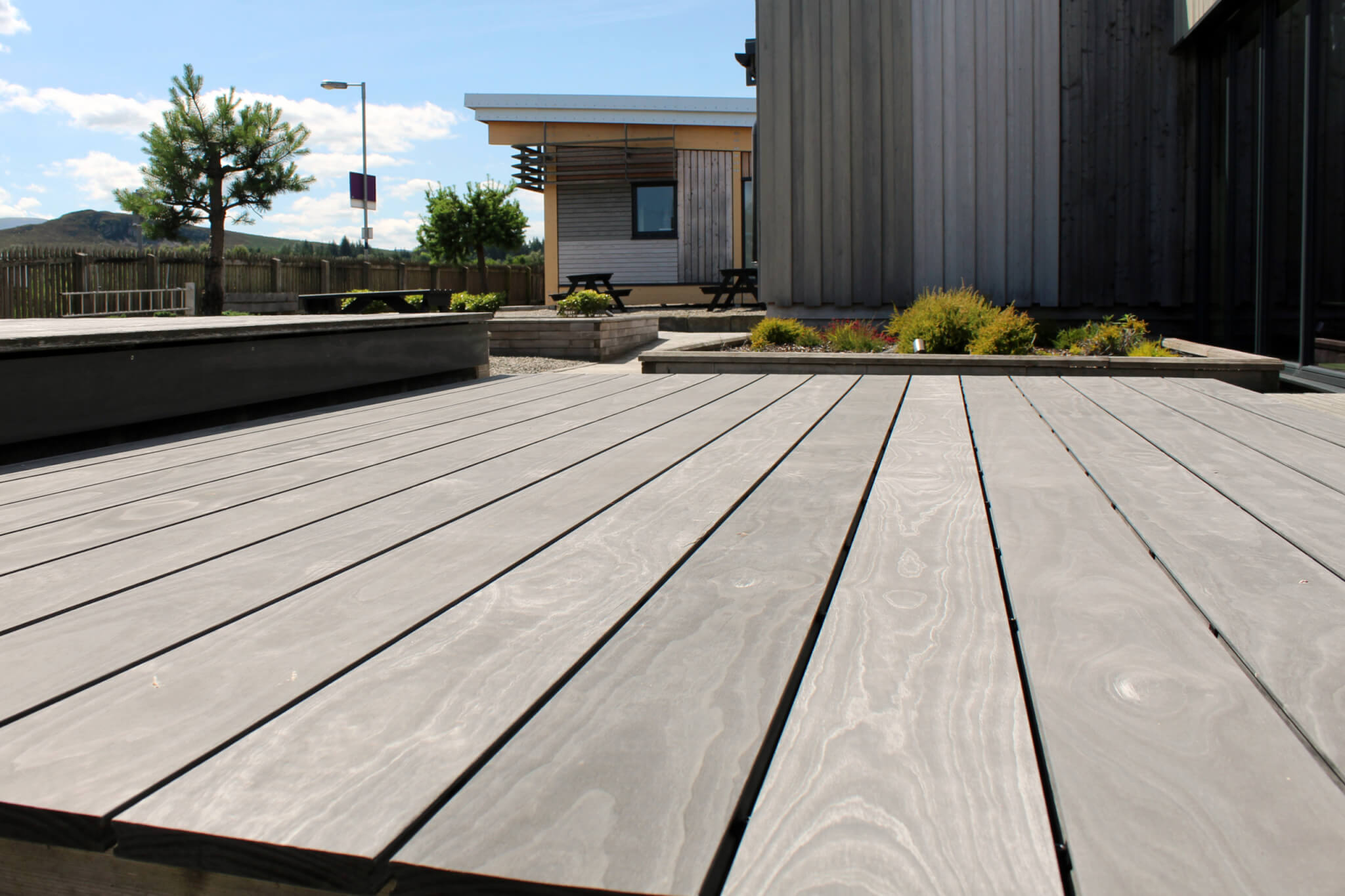
- Accoya® Color Grey Decking – A clear grade, acetylated timber coloured through the core in a soft grey tone, offering outstanding dimensional stability and a sleek, modern finish without the need for coatings.
Both products age beautifully over time, with minimal maintenance required, and are suitable for both domestic and commercial applications.
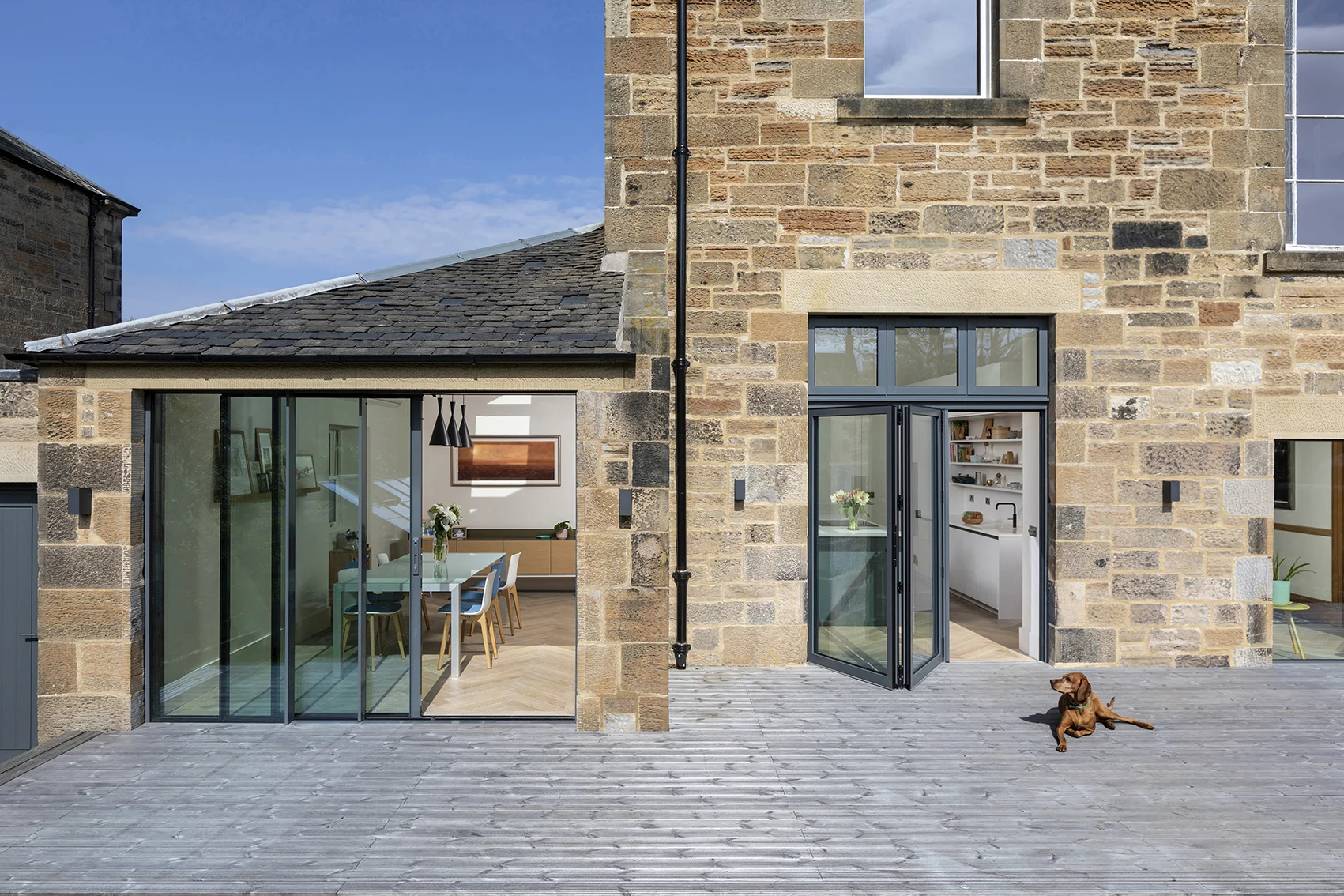
Easy to maintain and repair
Timber decking can be easily repaired or refinished, with individual boards replaced over time if needed. Correct detailing will increase the lifespan of your deck. SIHGA’s Senofix® FT, works in conjunction with Russwood decking profiles to provide a secret-fix solution – resulting in a clean, refined surface.
Unlike interlocking composite systems, which can be difficult to patch or dismantle, timber allows for straightforward upkeep and long-term flexibility.
And when it finally reaches the end of its service life, timber can be reused, recycled, and ultimately, returned to the earth – offering a more circular, sustainable solution.
Whether you’re specifying a private terrace or a large-scale public realm project, timber decking offers a natural, durable and sustainable solution that performs beautifully in use.
Want to find out more?
Explore our decking range or get in touch with our team for advice on the best species for your project.